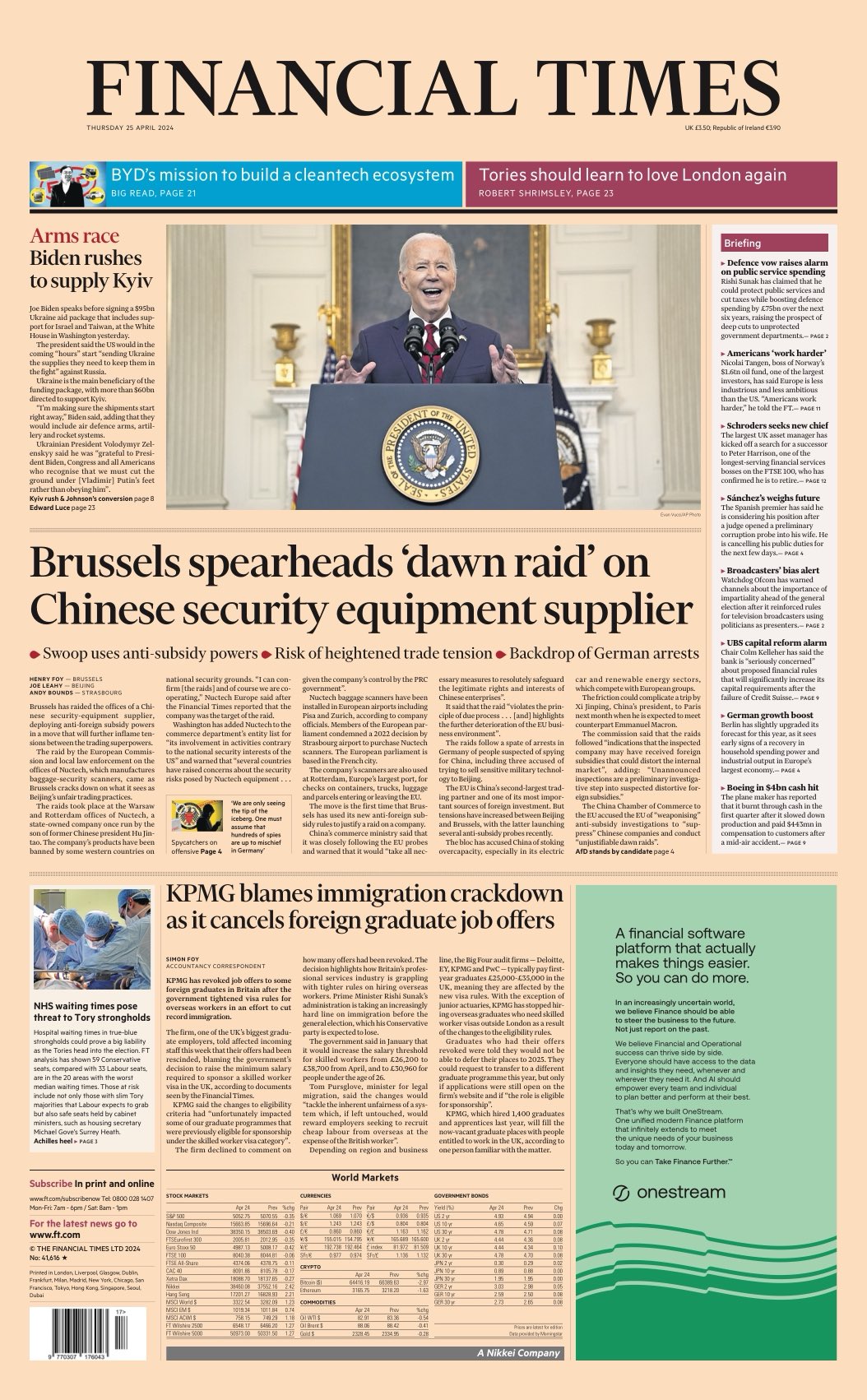
Click to Enlarge
Facebook
Twitter
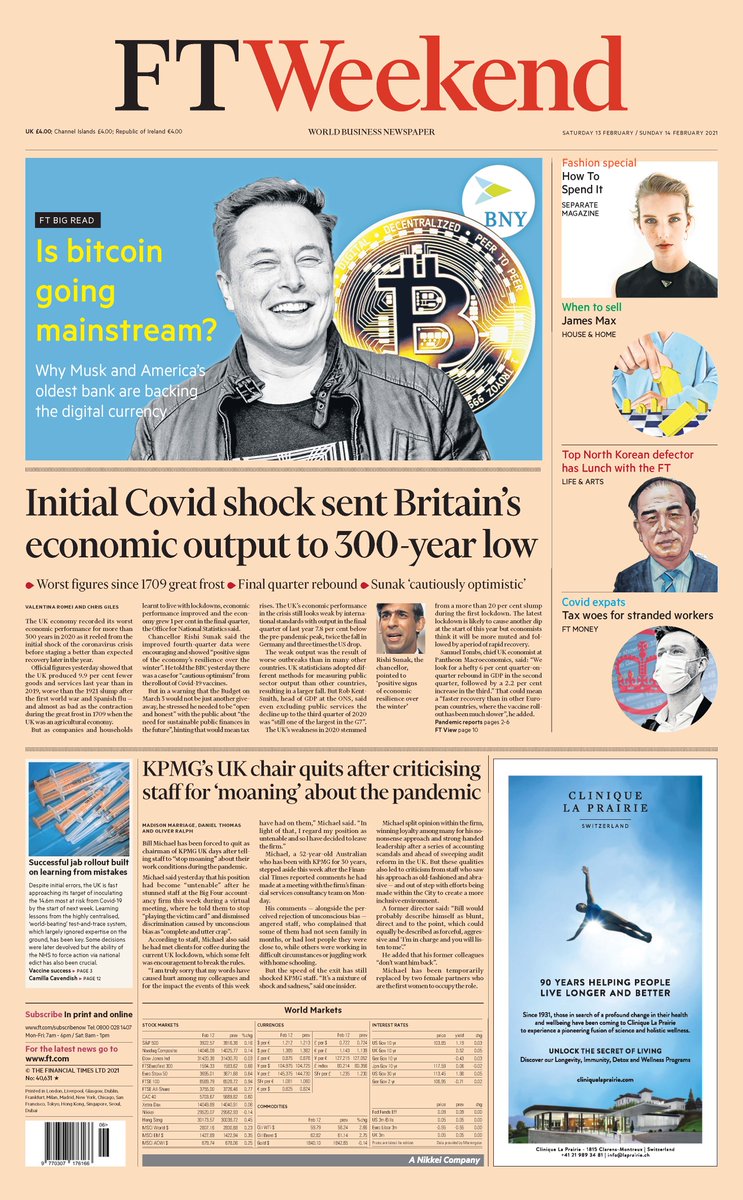
The initial shock of the pandemic caused the UK’s economic output to fall by the largest amount since the Great Frost of 1709, the Financial Times says. But it says Chancellor Rishi Sunak sees a case for “cautious optimism” as the economy grew by 1% in the final quarter of 2020.

Financial Times Front Page 7th of March 2026

Qatar warns regional turmoil could force the Gulf to halt oil and LNG exports within days, as risks to shipping and storage mount. Iraq and Kuwait have cut output. Prices have jumped to a two‑year high, stoking worries over supply security, trade flows and inflation.

Read More »

Financial Times Front Page 6th of March 2026

Washington, working with Gulf partners, plans to buy mass‑produced, low‑cost drone interceptors from a European ally to counter one‑way drones used by a regional adversary, as pricey missile stocks dwindle. Talks involve the UAE and Qatar, with rapid scaling to strengthen Western and Gulf air defences.

Read More »

Financial Times Front Page 5th of March 2026

US forces sank an Iranian frigate near Sri Lanka, the first torpedoing of an enemy ship since the second world war. Washington says the move deters further regional attacks, while shipping in the Indian Ocean and Gulf faces higher risk, prompting insurers and energy markets to brace for disruption.

Read More »

Financial Times Front Page 4th of March 2026

Escalating tensions in the Middle East triggered an energy supply shock that hammered global markets. Equities fell and sovereign bonds swung as oil surged on risks to output and key routes. The upheaval raised inflation concerns and complicated central bank plans.

Read More »