Click to Enlarge
Facebook
Twitter
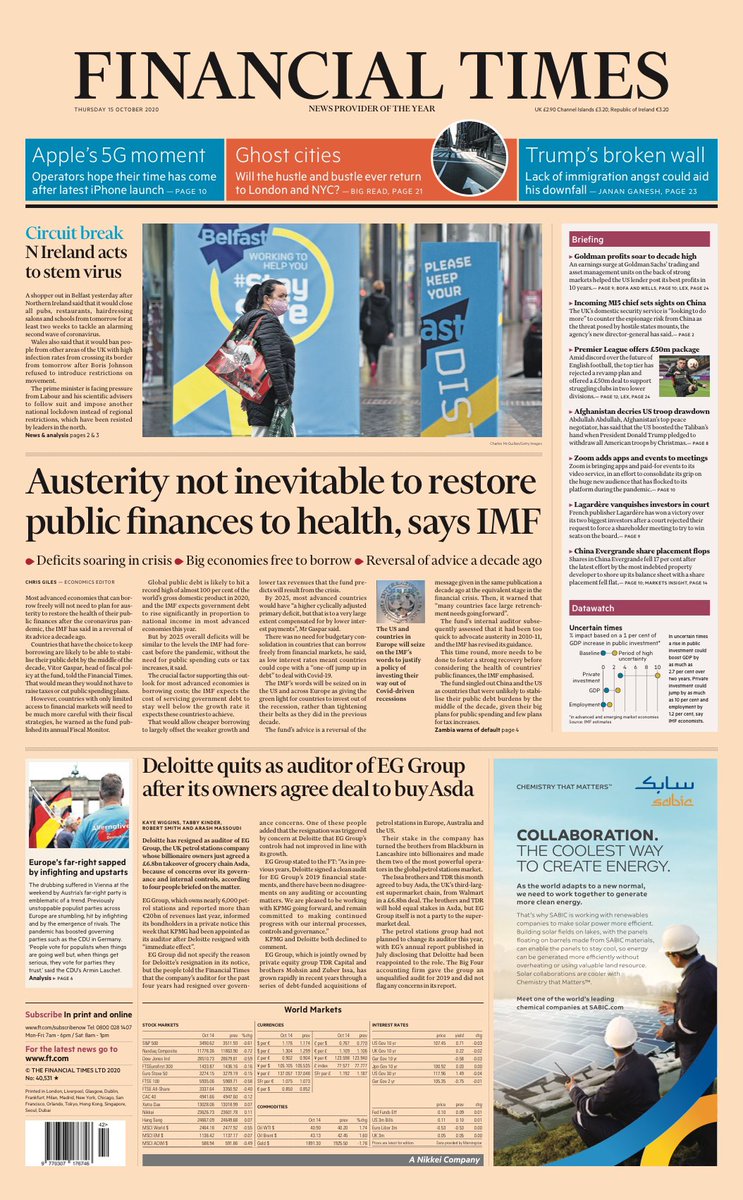
The Financial Times leads with comments from the International Monetary Fund (IMF), which has said that most advanced economies that can borrow freely will not need to plan for austerity to restore the health of their public finances after the pandemic – a reversal of its advice a decade ago. However, Vitor Gaspar, head of fiscal policy at the fund, has told the paper that countries with only limited access to financial markets will need to be much more careful with their fiscal strategies.

Financial Times Front Page 21st of March 2026

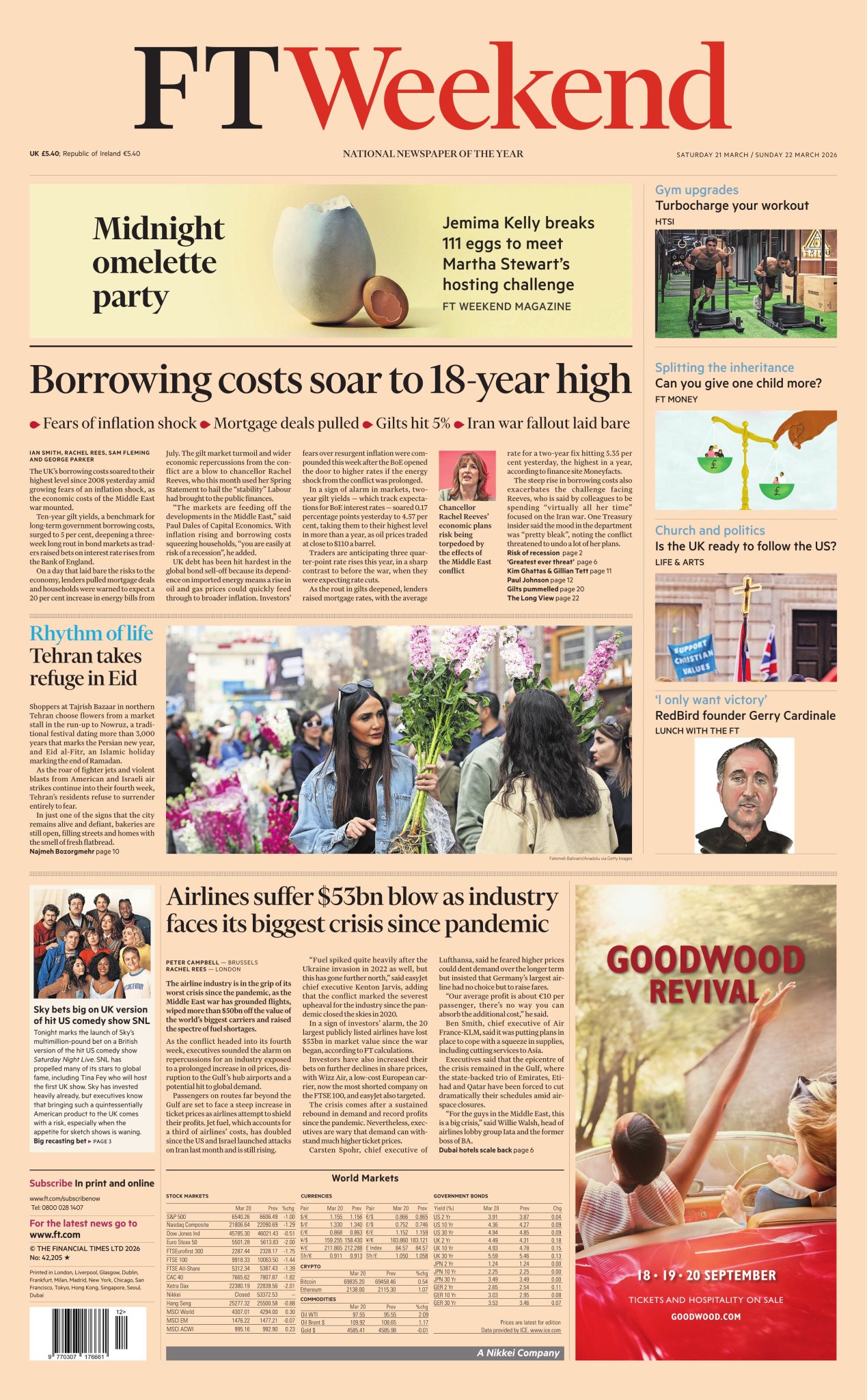
UK borrowing costs have hit an 18-year high as gilt yields top 5%, prompting banks to pull mortgage deals. Traders bet inflation will prove stickier and rates stay higher for longer, lifting swap costs. The squeeze threatens the housing market and piles pressure on the PM and chancellor.
Read More »

Financial Times Front Page 20th of March 2026

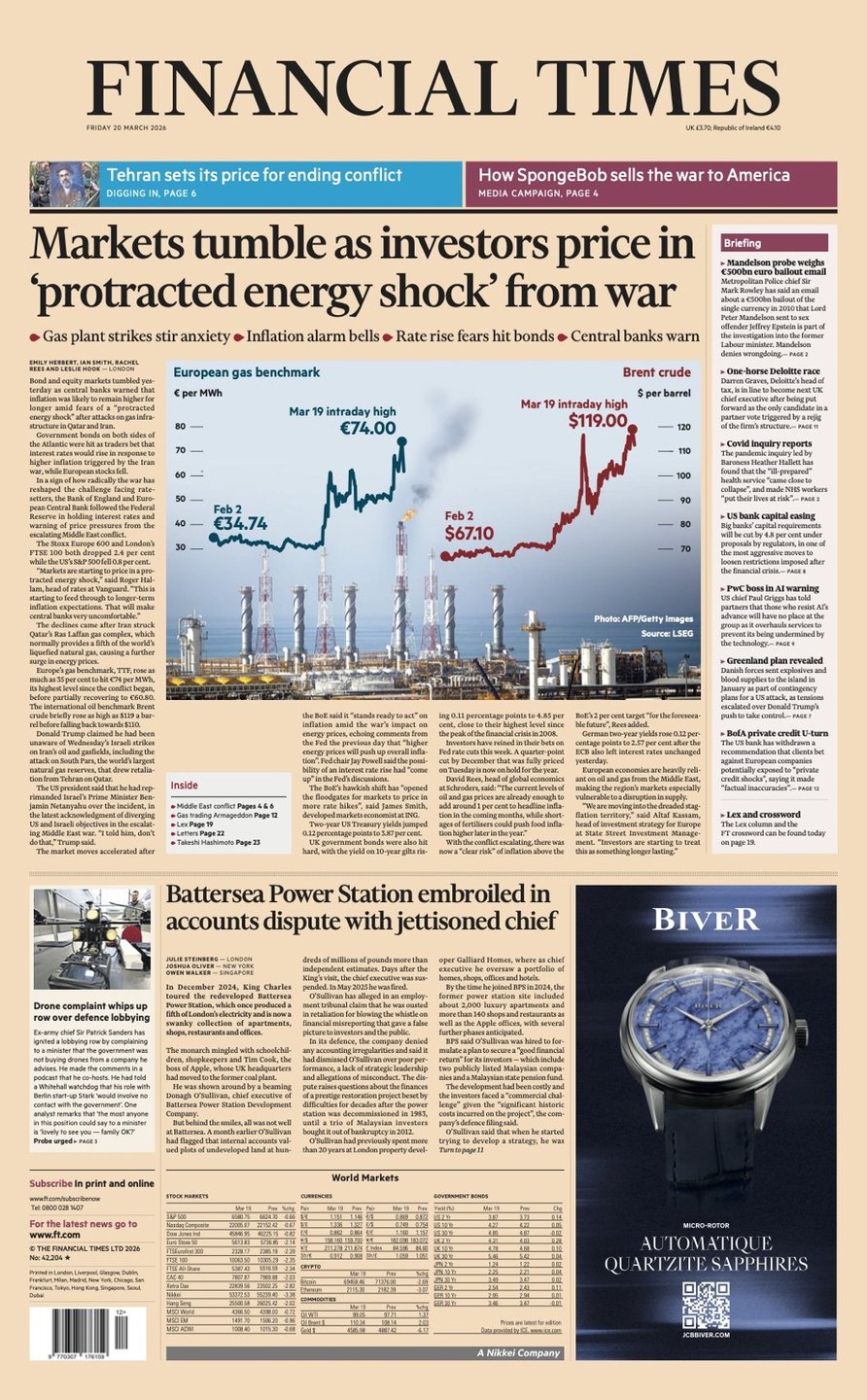
Global markets slid as investors priced in a prolonged energy shock linked to a geopolitical crisis. Oil and European gas jumped, inflation risks mounted and bond yields rose. Central banks cautioned that price pressures may persist, lifting expectations of faster tightening across the West.

Read More »

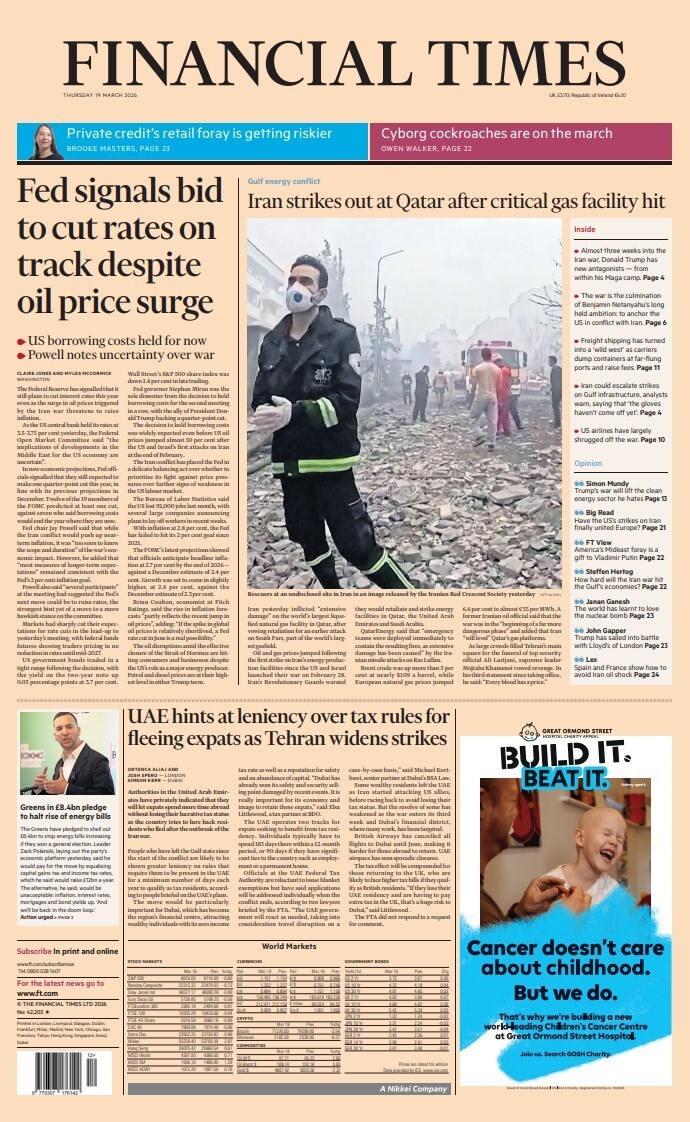
Financial Times Front Page 19th of March 2026

US rates were kept on hold, but the Fed signalled it still aims to cut later this year despite a jump in oil prices. Powell said inflation is easing, though geopolitical risks cloud the outlook. Markets read the guidance as steady progress towards loosening, contingent on data.

Read More »

Financial Times Front Page 18th of March 2026

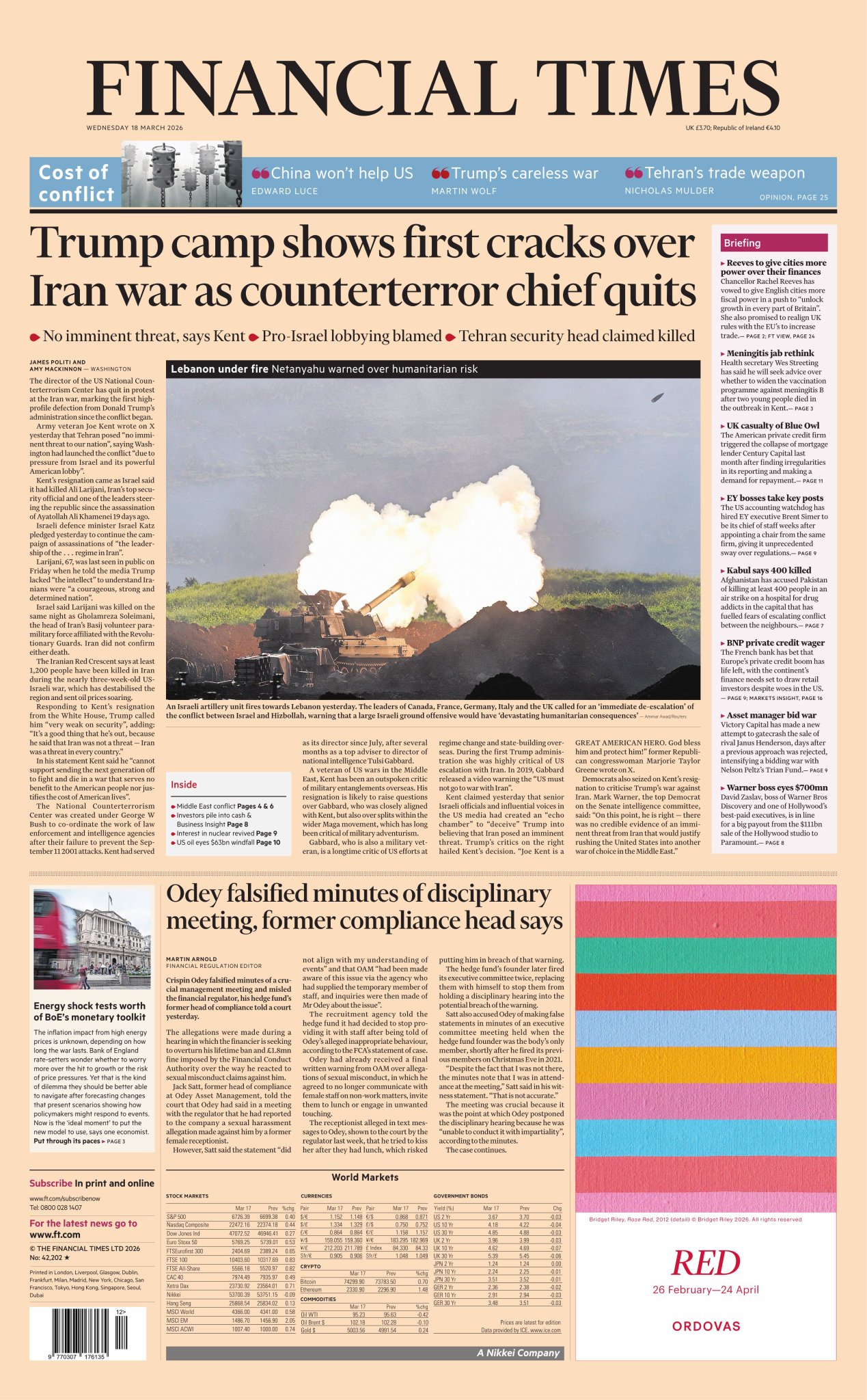
The head of the US counterterror centre resigned, revealing splits in Trump’s circle over policy on Iran. He said there was no imminent threat and criticised lobbying influence. The departure raises doubts about strategy and pressures Washington and allies to seek restraint.

Read More »